Elevate the power of your work
Get a FREE consultation today!
This Iron Mountain Data Centers (IMDC) ebook gives a quick overview of the factors that are driving and shaping the expanding infrastructure footprint that will support high-performance hyperscale and neocloud services around the world.

While the tech refresh rate for chips appears to be speeding up, there are some parts of the accelerated computing revolution that are easier to predict. Because building takes time, data center infrastructure is one of them.
This Iron Mountain Data Centers (IMDC) ebook gives a quick overview of the factors that are driving and shaping the expanding infrastructure footprint that will support high-performance hyperscale and neocloud services around the world.
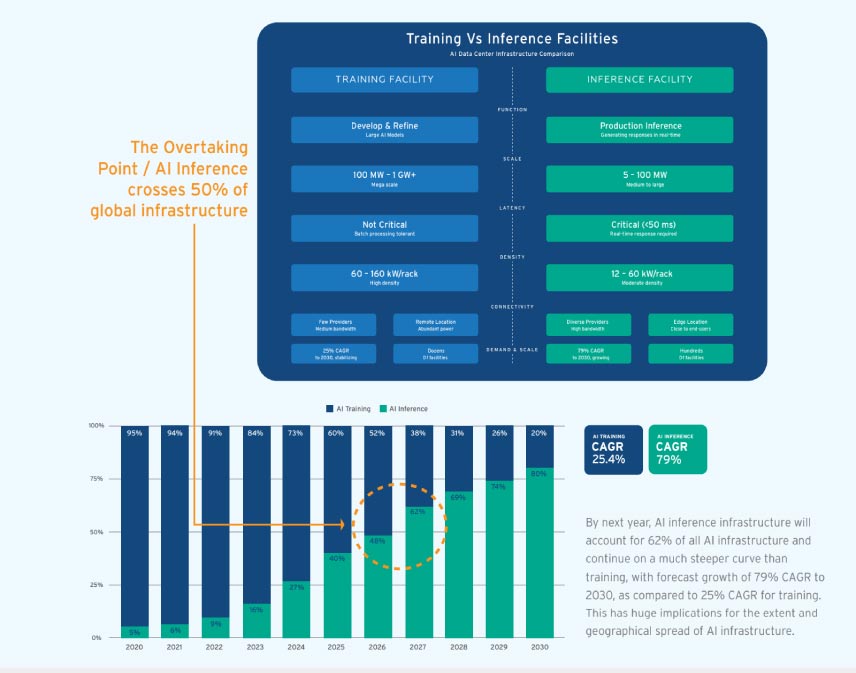
While a lot of complex AI models are still being developed, the first generation of LLMs and agents are now out on the street and earning, having graduated through training to production, aka inference. By its nature, inference will require much more capacity than training, as it will be round-the-clock and cumulative. To support this coming of age, the next few years will see a wholesale shift in the investment in high-density liquid-cooled large-scale infrastructure, away from (but maintaining) training, towards less “mega” more distributed end-user-focused inference hubs.
Power availability is the primary dictator, and limiter, of AI ́s growth, with particular pinch points in and around densely populated mature markets, struggling with ageing infrastructure and the energy transition. This puts these areas, the traditional locations for clouds and colocation, at a premium.
Get a FREE consultation today!